Akademisyen · Ar-Ge Mühendisi

Yapay zekâyı laboratuvardan sahaya taşıyorum.

Makine öğrenmesi ve derin öğrenme üzerine çalışan bir akademisyen ve Ar-Ge mühendisiyim. Araştırmalarımı üretime dönüşen sistemlerle birleştiriyor; öğrendiklerimi burada yazıyorum.

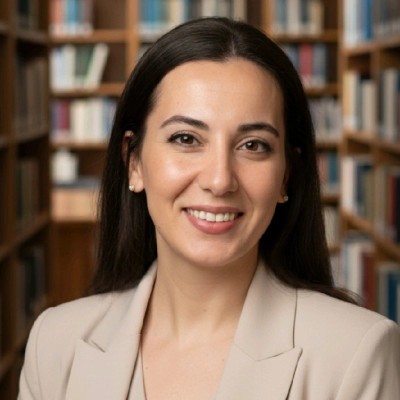
Fotoğraf alanı
Dr. Kübra Karacan Uyar

Araştırma Alanları

  • Makine Öğrenmesi
  • Derin Öğrenme
  • Doğal Dil İşleme
  • Bilgisayarlı Görü
  • Güvenilir Yapay Zekâ
  • Ar-Ge Yönetimi

Akademik Çalışmalar

Öne Çıkan Yayınlar

Tümü
2026Dergi Makalesi

Segment-Aware LorentzFM: Hyperbolic embedding approach for personalized job recommendations

Kübra Karacan Uyar, Yücel Batu Salman

Array, 100740 (Elsevier)

Özet +

Job recommendation systems face two critical challenges: treating users as a homogeneous group despite diverse job-seeking behaviors, and inadequately modeling the hierarchical nature of job markets. This study proposes Segment-Aware LorentzFM, a novel framework combining behavioral user segmentation with Lorentz-model hyperbolic embeddings. We analyze 1.6 million job applications from 103,896 users on Kariyer.net, revealing three distinct behavioral segments through unsupervised clustering: Ideal Candidates (38.1%) with focused patterns, Career Explorers (51.4%) with diverse behaviors, and Balanced Seekers (10.5%) with moderate exploration. We establish a theoretical foundation connecting segmentation with hyperbolic geometry, proving optimality through information-theoretic and geometric perspectives.

  • öneri sistemleri
  • hiperbolik gömme
  • LorentzFM
  • kullanıcı segmentasyonu
2026Konferans Bildirisi

LightConeFM: Unconstrained Lorentz Embeddings for Collaborative Filtering

Kübra Karacan Uyar

2026 6th International Conference on Electrical, Computer and Energy Technologies (ICECET), 1–7 (IEEE)

Özet +

Hyperbolic embedding methods for collaborative filtering constrain all representations to the hyperboloid manifold, imposing a single geometry regardless of data characteristics. We introduce LightConeFM, which removes this constraint and allows embeddings to freely occupy any causal region of Lorentz-Minkowski space — timelike, lightlike, or spacelike — using only standard gradient descent without Riemannian optimization. Experiments on four real-world datasets reveal two consistent findings: unconstrained embeddings outperform their constrained counterparts on every dataset (up to +7.0% AUC), and the learned causal zone distribution predicts where hyperbolic geometry provides benefit over Euclidean alternatives.

  • işbirlikçi filtreleme
  • Lorentz gömme
  • hiperbolik geometri
2025Dergi Makalesi

biLorentzFM: Hyperbolic Multi-Objective Deep Learning for Reciprocal Recommendation

Kübra Karacan Uyar, Yücel Batu Salman

Applied Sciences, 15(22), 12340 (MDPI)

Özet +

Reciprocal recommendation requires satisfying preferences on both sides of a match, which differs from standard one-sided settings and often involves hierarchical structure (e.g., skills, seniority, education). We present biLorentzFM, a multi-objective framework that integrates hyperbolic geometry into factorization machine architectures using Lorentz embeddings with learnable curvature and manifold-aware optimization. On a large-scale recruitment dataset from Kariyer.net (1,150,302 interactions, 229,805 candidates), the model achieves candidate and company AUCs of 0.9964 and 0.9913 respectively, representing 6.6% and 6.0% improvements over the strongest Euclidean baseline while maintaining practical inference latency (2.1 ms per batch).

  • karşılıklı öneri
  • hiperbolik geometri
  • faktörizasyon makineleri
  • derin öğrenme
2023Dergi Makalesi

A Novel Multistage CAD System for Breast Cancer Diagnosis

Kübra Karacan, Tevfik Uyar, Burcu Tunga, M. Alper Tunga

Signal, Image and Video Processing, 17(5), 2359–2368 (Springer London)

Özet +

Computer-aided diagnosis (CAD) systems are widely used to diagnose breast cancer using mammography screening. In this research, we proposed a new multistage CAD system based on image decomposition with High-Dimensional Model Representation (HDMR), which is a divide-and-conquer algorithm. We used digital mammograms from the Digital Database for Screening Mammography as dataset. We neglected BIRADS classification and used a brand-new clustering based on HDMR constant and breast size. To find the best performance of the HDMR-based CAD system, we compared different pre-processing settings such as contrast enhancement with CLAHE and HDMR, feature extraction with HDMR, feature scaling, and dimension reduction with Linear Discriminant Analysis.

  • bilgisayar destekli tanı
  • meme kanseri
  • mamografi
  • HDMR
  • makine öğrenmesi

İletişim

İş birliği, danışmanlık veya araştırma önerileri için yazabilirsiniz.

İletişim formu
Dr. Kübra Karacan Uyar — Akademisyen · Ar-Ge Mühendisi